A Rainy Day Plan with One Fixed Point
Build a rainy day plan around one indoor anchor, with nearby alternatives that help you stay comfortable and choose what to do as conditions change.
The common mistake in a rainy day plan is to replace every outdoor stop with another booked activity. It can turn a change in weather into a day of rushing between tickets, transit and wet sidewalks. A better rainy day plan starts by checking what the weather makes uncomfortable, then choosing an indoor place that suits the time you have and the part of town you want to explore.
That place might be a museum, covered market, public conservatory, historic house or library. Each changes the day in a different way: a museum gives you time with a collection, a market keeps you moving, and a library offers a quiet place to pause. The right choice depends on what you want from the day, not simply whether the building has a roof.
Choose for the weather
Start with the conditions that would actually alter your plans. Steady rain may make a long outdoor walk unpleasant; brief showers might call only for a shell and a place to duck inside. If wind, slippery paths or poor visibility are concerns, prioritize sheltered routes and venues that do not require crossing town on foot.
Check the venue’s own information for opening hours, entry arrangements, accessibility and any rules that affect your visit. Think about whether you would enjoy staying there if the rain lasts longer than expected. A place with seating, a cloakroom or a café may be more comfortable than one that offers little chance to rest.
Consider what commitment the venue asks of you. A timed ticket can make sense if entry is limited or the visit matters to you. If arrival is flexible, an unbooked visit may be easier to fit around changing conditions. Avoid adding a second appointment unless it solves a specific problem.
Read the nearby streets
Look at the blocks around the venue, not just the attractions marked on a map. Covered passages, arcades, cafés, libraries and transit entrances can make an area easier to use during a shower. Check whether the route between them is actually sheltered; a cluster of indoor places can still involve an exposed walk.
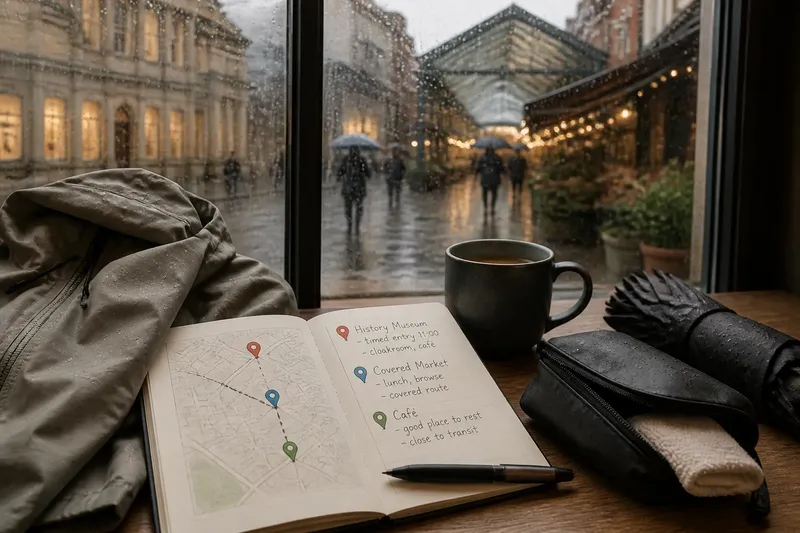
Choose nearby alternatives for distinct reasons. One might offer a place to sit, another a short indoor visit. Check that each is open and accessible before relying on it, but there is no need to reserve every possibility. A short note beside each saved map pin can help you remember why it might be useful.
Keep expectations modest. The nearby place does not need to be another major attraction. A covered market can be enough for a dry walk and something to eat; a café can be a welcome pause when wet clothes or tired feet make another visit unappealing.
Pack for the actual day
Take gear that addresses the forecast and your route. A rain shell may be easier to manage than an umbrella on crowded sidewalks; an umbrella may suit a day with short walks and open streets. Shoes with a secure grip can help on wet pavement. A small bag for damp items keeps them separate from dry belongings.
Do not carry equipment for every imagined disruption. If you will move mostly between transit stops and indoor venues, bulky rain gear may be more nuisance than help. Check the day’s conditions before leaving, then make a simple choice about what you will actually use.
Save the venue address and the nearest useful transit stop offline if your service may be unreliable. Check the route for exposed stretches, stairs or transfers that could be awkward in wet weather. A direct trip to a comfortable place may be preferable to a more ambitious route with several outdoor connections.
Work through a rainy day
Say you are visiting a city neighborhood on a day when steady rain is forecast. You want to see a local history collection, but the museum has timed entry and the route to it includes an exposed walk. You check the museum’s opening details, reserve an entry that fits your arrival, and save a covered market and a nearby café on the map. You pack a shell and a bag for damp belongings, then use transit to avoid the exposed approach.
After the museum, the rain is still falling. You choose lunch at the market rather than walking to a distant viewpoint, then decide whether to visit the café or return by transit. If the rain eases, a short nearby walk remains an option. The tradeoff is clear: you give up the distant view for a more comfortable day, without needing to rebuild every part of the plan.
When should you change course?
Change course when the conditions, access or your comfort make the original choice less useful. A simple decision is enough: check the venue and route, compare the effort of continuing with the nearby alternatives, then choose the option that fits how the day feels. The questions below help with the common choices.
Should I book the indoor anchor?
Book when entry is limited or a particular time matters to you. If arrival is flexible, an unbooked visit can leave more room to adjust.
What if the rain stops?
Go outdoors if you want to and the route feels suitable. Choose a nearby walk or viewpoint you can leave easily if the weather turns again.
What if the venue is closed?
Use a nearby place that serves the same need, such as somewhere to browse or sit. Check current opening information before setting out, and keep the closure’s replacement close enough to avoid a long wet detour.
How much rain gear should I carry?
Bring what suits the route and conditions: a shell, an umbrella, or both only if they have separate uses. If most of the day is indoors and transit-connected, avoid carrying gear that will make moving between stops harder.
Let conditions decide
Before leaving, check the venue’s status and the route there. Once you arrive, notice whether the rain, crowds or your energy make another stop worthwhile. You do not need to keep moving simply because an option is saved on your phone.
It is not worth refreshing the forecast all day or preparing a separate route for every passing cloud. A quick check before setting out and attention to the conditions around you are usually more useful. A rainy day plan works best when it protects the parts of the outing that matter, while letting the weather decide how much else is comfortable.